

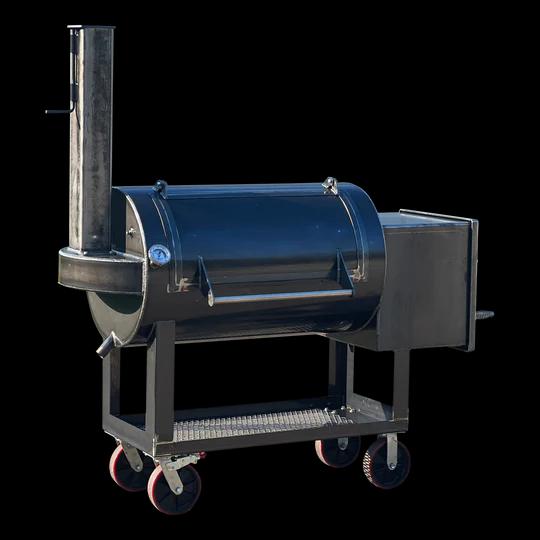
So you're thinking about getting into real barbecue. Not the gas grill, throw-a-few-burgers-on-it kind of thing. I mean the low and slow, wood smoke curling up into the sky, neighbors wandering over asking what smells so good kind of barbecue. If that's where your head's at, you've probably already stumbled across the term "custom offset smoker grills" a dozen times online. And honestly? The hype is mostly earned. Mostly.
I've been around pits for a long time now, and I still remember the first offset I ever cooked on. It was a cheap one, thin gauge steel, leaked smoke out of every seam like it had a personal grudge against efficiency. Took me a full weekend of trial and error just to keep a steady 250 degrees. That experience taught me something a lot of new pitmasters learn the hard way — the smoker matters. Like, a lot.
What Even Is an Offset Smoker, Anyway
Quick refresher for anyone who's newer to this. An offset smoker has two chambers. One's the firebox, off to the side, where you build your fire with wood or charcoal. The other is the main cooking chamber, where your meat sits. Heat and smoke travel from the firebox, through the cook chamber, and out a chimney on the far end. That's the "offset" part — the fire is offset from the food.
Sounds simple. It kind of is, on paper. But the physics of heat and smoke moving through steel is where things get tricky, and where a lot of cheap models fall flat. Bad welds, thin metal, no baffle plates to even out the heat — you end up chasing temperature swings all day instead of actually enjoying your cook. Not fun. Not what barbecue's supposed to feel like.
The Case for Going Custom
This is where offset wood smokers built to spec really start to make sense. A custom build isn't just about looking cool in your backyard (though, let's be honest, that's a nice bonus). It's about getting a rig that's actually built for how you cook.
Maybe you smoke briskets for 40 people every weekend. Maybe it's just you and a couple ribs on a Sunday afternoon. Those are two completely different needs, and a mass-produced smoker off a store shelf is trying to be a jack of all trades. Custom offset smoker grills, on the other hand, get built around your actual cooking habits — chamber size, firebox capacity, steel thickness, even little things like where the handles sit or how the doors seal.
And the steel thickness thing, I can't stress this enough. A lot of the budget smokers you'll find are made with 1/8 inch steel or thinner. It heats up fast, sure, but it also loses heat just as fast the second the wind picks up or the temp outside drops. Custom builds tend to run thicker gauge steel, sometimes 1/4 inch or more, which holds heat steady for hours. That's the difference between babysitting your fire every fifteen minutes and actually being able to sit down, have a beer, and let the pit do its job.
Offset Wood Smokers vs. Everything Else
People ask me all the time why bother with offset wood smokers when pellet grills exist now and basically run themselves. Fair question. Pellet grills are convenient, no doubt about it. Set the temp, walk away, come back to dinner.
But convenience isn't flavor. There's something about true wood-burning offsets — the way the smoke rolls through the chamber, picks up that deep, almost sweet bark on a brisket, the way the fire needs tending and rewards you for it — that pellet grills just can't fully replicate. It's more work, yeah. I won't pretend otherwise. You're feeding logs, watching your fire, adjusting dampers. But the payoff on that bark and smoke ring is real, and anyone who's had both will usually tell you the same thing.
Offset wood smokers also give you way more control once you know what you're doing. You can run hotter for a quicker cook, cooler for an overnight brisket, throw in different wood types depending on what you're cooking. Oak for beef, pecan or apple for pork, whatever suits your taste. That kind of flexibility isn't something you get with a set-it-and-forget-it system.
What to Actually Look For in a Custom Build
Alright, so say you're sold on the idea. What should you actually be looking at when comparing custom offset smoker grills?
First, steel gauge. Ask directly what thickness they're using. If a builder can't answer that quickly, that's a red flag honestly.
Second, look at the welds. Rough, uneven welds usually mean smoke leaks, and smoke leaks mean you're fighting your fire constantly. A good build should have clean, tight seams throughout.
Third — and this one's underrated — ask about the firebox design. Does it have a baffle plate? Does it manage airflow well? This is the part that separates a smoker that runs even heat from one that torches the meat closest to the fire while leaving the far end cold.
Fourth, think long term. Wheels for mobility, a good latching system on the doors, maybe a built-in thermometer that's actually calibrated correctly (a lot of stock gauges are off by 50 degrees, no joke). These little details add up over years of use.
Building a Relationship With Your Pit
Here's something nobody tells you when you're starting out a offset wood smokers becomes kind of a partner in this whole process. You learn its quirks. Where the hot spots are, how it behaves in cold weather versus summer heat, how long it takes to come up to temp. That relationship takes time to build, and it's a lot easier to build with a smoker made well from the start rather than one you're constantly fighting.
That's really the whole argument for going custom. You're not just buying a smoker, you're investing in years of cooks, family gatherings, competitions maybe, or just quiet Saturday mornings with coffee and a fire going. Might as well get something that's going to hold up and perform the way you need it to.
FAQs
1. How long does it take to get a custom offset smoker built? Depends on the builder and how detailed your specs are, but generally you're looking at anywhere from a few weeks to a couple months. Custom work takes time, so it's not something you order today and grill on tomorrow.
2. Are custom offset smoker grills more expensive than store-bought ones? Usually, yeah, at least upfront. But the steel quality, welding, and design usually mean it lasts a lot longer and cooks a lot more evenly, so you're paying for that long-term value.
3. What wood works best in offset wood smokers? Oak and hickory are solid all-around choices, especially for beef. Fruit woods like apple, cherry, or pecan tend to work great with pork and poultry if you want something a bit milder and sweeter.
4. Can beginners handle an offset smoker, or is it too complicated? Beginners can absolutely learn it, but there is a learning curve. Expect a few rough cooks while you figure out your fire management. A well-built smoker with even heat honestly makes that learning curve a lot less painful.