

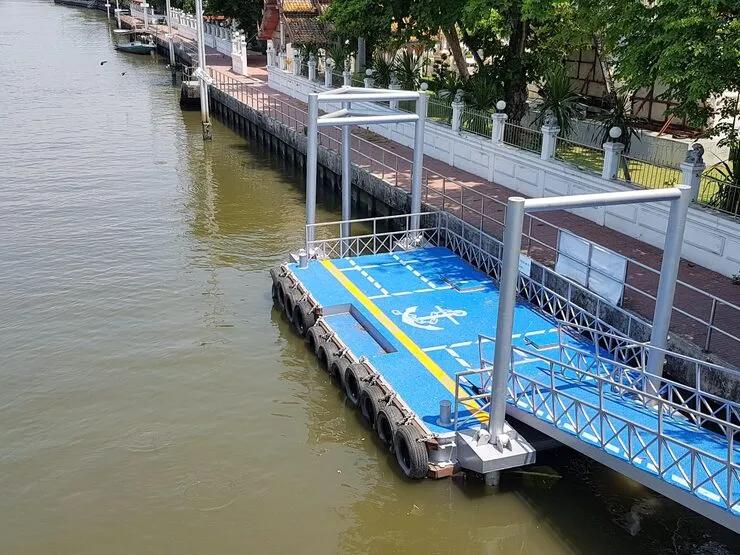
People ask me this at least once a month, usually standing on somebody's shoreline with a coffee going cold. Are aluminum boat docks really worth what they cost? I never have a quick answer. It depends. On your water, your boat, how handy you are, and whether you'd rather spend Saturday fishing or sanding boards. When I was a kid, every dock on our lake was wood, gray and splintery, and everybody just accepted that you'd be replacing planks every few years. Steel showed up for folks with a bigger budget. Now you see aluminum everywhere, and I get why people are curious. A dock isn't something you buy, hate, and return. It's sitting in your water for years, getting hit by ice and wind and wake and whoever's visiting for the Fourth. So here's what I'd want to know before writing a check. Some of it's obvious, some of it nobody mentions until you're already stuck.
Will It Rust, Though?
Not the way steel does. That's the big draw. Aluminum builds its own thin oxide coating, and that coating protects the metal underneath, so a scratch kind of takes care of itself. Water wrecks most docks, so a metal that doesn't care about being wet is ahead before you start. Now, I wouldn't say it can't have problems. Salt water is rough on everything, even the good stuff. And if somebody builds it with the wrong fasteners, or mixes metals that don't get along, you can get galvanic corrosion, basically two metals slowly chewing on each other. That's sloppy building. The aluminum didn't do anything wrong. So ask the builder which alloy they use, what coatings, what hardware holds it together. Pay attention to how they answer. If they get vague or start talking about something else, that tells you plenty. Freshwater lakes are about the best home for aluminum, which is probably why there are so many of them.

How Can You Tell If It's Built Right?
Look at the joints. Get down on one knee if you have to, because the corners tell you the whole story. When you're sizing up aluminum dock manufacturers, this is where they separate. Custom-engineered extruded parts matter here. Extrusions get shaped for the specific job, not just cut from generic tube, so pieces meet up tighter, and you've got fewer gaps where water sits and green gunk grows. You can feel it too. A cheap dock rattles a little, shifts when you step, maybe groans. A good one feels solid. Quiet. You'd be surprised how much you notice that after a few weeks. It looks better as well, and that counts, since you'll be looking at it every morning. Ask for photos of connections up close, not only the pretty wide shot with the sunset. Folks who take pride in their work love that request. The ones who change the subject, well.
Steel, Timber, or Aluminum?
There's no wrong answer. Just wrong fits. Bar H Solutions is a good example because they split things into three lines, and it's easy to see how each one thinks. Their Premier Series is the premium steel option, with a hip roof, and they talk up the craftsmanship on it. The Timber Series is a gable-roof dock with steel tube trusses they fabricate completely, and the site says it's a top choice for buyers because it's durable and has that bold look that doesn't go out of style. Then the Aluminum Series, which is about styling and fighting corrosion. So which one? If your shoreline gets rough or you simply like the heft of steel, go that way. If you want lighter, rust-resistant, and a more refined look, aluminum has the argument. Most people pick with their eyes first. I did. You justify it later. That's fine, just make sure what's under the pretty part is actually engineered well, because looks won't hold a roof up in a storm.
How Much Work Is Upkeep?
Less than wood, by a lot. No staining, no sealing every spring, no yanking up rotten boards after a wet couple of years. With aluminum boat docks, you're mostly hosing off dirt, looking over bolts and hardware, and watching stuff that moves like hinges. Maybe twenty minutes when the season starts. But don't believe anybody who promises zero maintenance; that's a sales line. Ice pushes docks around. Branches and junk slam into them. Fasteners work loose slowly; you won't even notice. What I tell people is, the cheapest repair is the one you catch early. So walk the dock now and then. Actually, look. Tighten whatever's loose and move on with your day. A well-built one you'll forget about most of the year, and that's kind of the whole goal: a dock that just sits there doing its job. The ones you're constantly thinking about are usually the ones eating your money.

Who Should You Hire?
Ask who designs and builds it. Not everyone does; plenty of outfits just resell. Among aluminum dock manufacturers, that gap shows up later, when you need warranty help, or a custom change, or just somebody to call you back. Ask about materials and coatings. Ask who installs it and how long that takes and whether they've done a shoreline like yours, since every lot has some weird thing, a slope, rocks, soft bottom. Get photos of real finished jobs, not stock pictures. If a company makes it simple to book an appointment and talk through your actual site, good sign. Bar H leans on that, pointing people straight to contact them, which makes sense for something this custom. And look past the dock. Cleats, bumpers, ladders, all the accessories change how it feels to use, and some builders sell them online so you aren't hunting down five suppliers. A company hiring is usually busy too, though that's a hint, not proof.
Conclusion
For most waterfront owners, yeah, if you buy carefully. Aluminum boat docks give you strong corrosion resistance, easier upkeep, and a look that holds up for years. But the metal isn't what makes it good. The engineering does, and how it's put together, and the people behind it. Compare steel and timber before you commit. Look at real finished work. Ask the annoying questions, even if they feel awkward at the moment. It's a big purchase, and you'll live with it a long time, so don't let anyone rush you. When you find a company that answers everything without getting defensive, you've probably found your builder. Then go stand at the water for a few minutes, picture it out there at sunrise, and decide.